
We hear a lot about balance challenges—whether it’s your child struggling to move safely through the community or simply having trouble standing still independently, balance plays a huge role in everyday functioning.
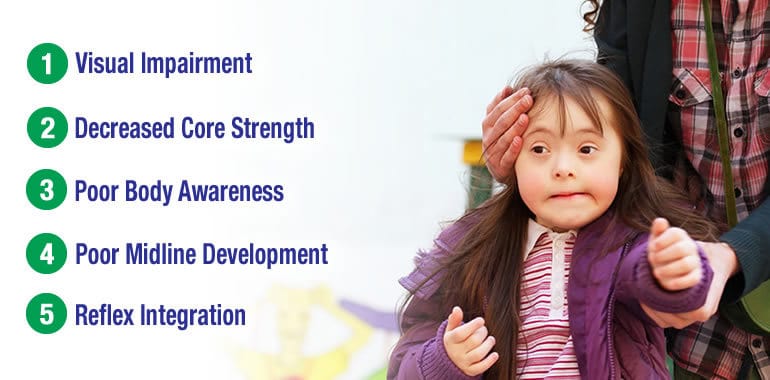
While there are many reasons balance can be tricky, here are the five most common causes we see:
1. Visual Impairment:
Sometimes it may seem like your child is just not paying attention or is weak, but poor balance could actually stem from how their eyes work together. It’s not just about how clearly they see, but how their eyes interpret the environment and send signals to the brain. If the eyes aren’t “on the same page,” balance can definitely be affected.
2. Decreased Core Strength:
Core stability is the foundation for good balance. Even if the legs and hips are strong, without a stable trunk, it’s tough to stand or stay steady. For kids who aren’t yet standing, difficulty holding their head upright can also be a sign of weak core control.
3. Poor Body Awareness:
This term describes how well someone knows where their body is in space. For example, you know your arm is out to the side even if your eyes are closed because your brain gets constant feedback from muscles and joints. If that feedback system isn’t working well, it can make coordination and balance harder, even unsafe.
4. Poor Midline Development:
Knowing where your body’s “middle” is helps keep you centered and upright. If a child doesn’t have a strong sense of their midline, maintaining good posture and balance becomes challenging.
5. Reflex Integration:
At birth, we have certain reflexes designed to help us as infants. Normally, these reflexes disappear—or integrate—as we grow. But with some neurological conditions, they may persist. For example, the Babinski reflex, which is normal in babies but typically fades by age two, causes the toes to fan out when the sole of the foot is stroked. If this reflex sticks around too long, it can make it hard for the child to keep their feet flat and balanced, because their toes naturally want to lift. Imagine trying to learn to play when your feet keep lifting off the floor!
Of course, these aren’t the only reasons for balance difficulties, and often more than one factor is involved. The key is being aware that balance affects not just your child’s daily life but the whole family’s well-being.
Have questions about your child’s balance? We’re here to help!

Christine Astarita
She discovered her passion for the neurologic pediatric and adult population during her clinical affiliation at a special services school in Cape May, New Jersey. She is an active member of the APTA and continues to take post-graduate course work related to treatment methods for neurological diagnoses.