Recently in the clinic, I asked a parent if her daughter had ever tried riding an adaptive bicycle. She wasn’t sure but thought she might have at school.
Then she asked,
“What kinds of benefits does that actually have for her?”
So, I thought I’d share the answer for anyone else wondering!
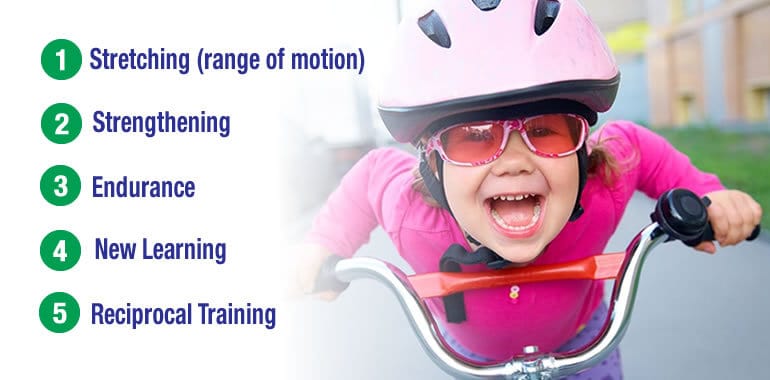
Stretching (Range of Motion):
Tight hamstrings are common in many of our kids — and, let’s be honest, in adults too! Riding an adaptive bike lets them stretch their legs dynamically, and it can even provide a nice gentle stretch for their hips.
Strengthening:
Even if your child can’t pedal all the way around, just activating those muscles is strengthening them. If they can initiate pedaling, challenge them to see how many rotations they can do before getting tired! If not, try practicing on a slight downhill or gently cue their legs to start moving.
Endurance:
Cycling is a great cardio workout! It raises their heart rate and helps build endurance. If they can only pedal for a few minutes at first, that’s totally okay — let them rest and aim to increase their time little by little each session.
New Learning:
Learning to ride a bike is tough — remember how long it took you? For a child with a neurological condition, they may need thousands more practice repetitions to master a new skill. Riding helps with motor planning — basically, how the brain tells the body what to do — which is crucial for all kinds of developmental milestones.
Reciprocal Training:
Ever wondered why you can hop back on a bike after years off and still ride (maybe a little wobbly)? That’s because cycling and walking use the same brain pathways. Since walking happens every day, you never really lose the ability to ride. For kids learning to walk with assistance, cycling can be a powerful way to reinforce those brain-body connections.
Pretty cool, right? Even if your child isn’t close to walking independently yet, riding an adaptive bike offers amazing benefits — stretching, strengthening, learning — and it’s a fun way to get some exercise!
Christine Astarita
She discovered her passion for the neurologic pediatric and adult population during her clinical affiliation at a special services school in Cape May, New Jersey. She is an active member of the APTA and continues to take post-graduate course work related to treatment methods for neurological diagnoses.