
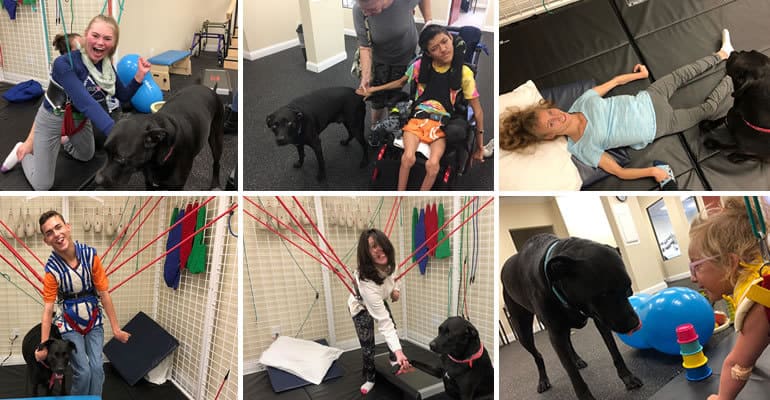
Many parents have shared how much their children love the occasional therapy dog visits at school—and how impactful those moments can be. So yes, bringing Chance to work might seem like just a perk for me (and it is!), but the decision goes far deeper than simply having my dog join me on the job.
Growing up, we always had a dog in the house. Through every chapter of life—grief, stress, joy—my connection with our pets grounded me in ways I couldn’t always explain. And it turns out, science backs that up. Study after study shows that the human-animal bond can lower stress, ease anxiety, and boost emotional well-being for both people and animals.
At the clinic, we witness this magic daily.
Chance has an incredible way of easing nerves, creating comfort, and bringing smiles. For a child walking into our space for the first time—faced with unfamiliar equipment and exercises that challenge their bodies in new ways—it can be overwhelming. But when Chance is there? Suddenly the room feels a little safer. The task seems a little less scary. And that shift often translates to greater trust, more engagement, and faster progress.
Therapy dogs like Chance can also be part of animal-assisted therapy, which goes beyond emotional comfort. These dogs help promote social, emotional, and cognitive development in meaningful ways. Sometimes, just having a gentle, tail-wagging companion nearby makes the world feel a lot less intimidating.
There’s even growing research about the benefits of therapy dogs in schools—from increased focus and social skills to reduced stress and anxiety. That’s why you’ll find therapy animals in hospitals, nursing homes, college campuses, and even disaster relief zones. They have an uncanny ability to bring calm to chaos and joy to heavy spaces.
So yes, maybe I’m a little biased—but I’ve seen the difference Chance makes. And when treats become the highlight of a session, you know the motivation is real.
If your child has ever connected with a therapy animal, we’d love to hear your story. The impact is real, and often unforgettable.

Christine Astarita
She discovered her passion for the neurologic pediatric and adult population during her clinical affiliation at a special services school in Cape May, New Jersey. She is an active member of the APTA and continues to take post-graduate course work related to treatment methods for neurological diagnoses.