
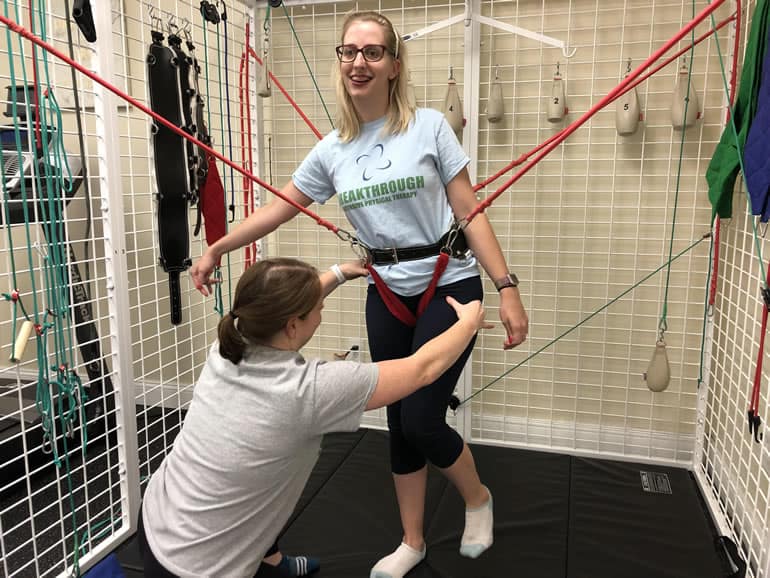
“I’ve never even realized I was getting up that way,”
“I cant believe I’ve been walking like this for so long!”
These are real quotes from our patients—right after we pointed out the subtle (and sometimes not-so-subtle) ways their bodies were compensating.
So what exactly is a compensation?
What Is a Compensatory Movement?
A compensatory movement is your body’s way of getting the job done when a normal or efficient movement pattern isn’t available. It’s a workaround—a shortcut.
Let’s say your glutes (butt muscles) are weak, and you try to stand up from the floor. Your body will naturally shift your trunk over the weaker hip to reduce the effort required. This is called a lateral trunk lean, and it helps you stand up with less muscle power.
Or maybe your right hip is weak during walking. Your body might respond by dropping the left hip with every step to make up for it. It’s not ideal—but it keeps you from falling.
Kind of amazing, right? Our bodies are incredibly adaptive.
So… Are Compensations Bad?
Yes… and no.
In the short term, compensations can be life-changing. They allow us to stay functional and independent despite weakness, pain, or injury. They’re the body’s way of saying, “I’ve got you covered—let’s keep moving.”
But here’s the catch: compensations are only meant to be temporary.
Over time, they come at a cost.
When one part of your body isn’t doing its job, another area has to pick up the slack. That leads to muscle imbalances, joint stress, and—eventually—pain.
Common Places Compensations Show Up
If your body is constantly compensating, it’s only a matter of time before symptoms show up. Some of the most common issues caused by long-term compensations include:
- Chronic hip pain
- Lower back discomfort
- Knee strain
- Tight, achy muscles that never seem to release—no matter how much you stretch or roll them out
That chronic tension you're feeling? It might be a muscle that's overworking to do someone else’s job.
How to Know if You’re Compensating
- Do your muscles always feel tight no matter how much you stretch?
- Are you dealing with the same tender spots, day after day?
- Do your movement patterns look or feel “off”—even if you can’t quite explain why?
These are red flags that your body may be compensating.
The best part? Compensations are correctable.
By identifying and strengthening the underactive muscles, we can retrain your body to move the way it was meant to. No more workarounds. No more overuse. And a lot less pain.
So yes, your body is smart—and it’s doing the best it can. But it deserves better than just “getting by.” Let’s help it move better, feel better, and function at its best.

Christine Astarita
She discovered her passion for the neurologic pediatric and adult population during her clinical affiliation at a special services school in Cape May, New Jersey. She is an active member of the APTA and continues to take post-graduate course work related to treatment methods for neurological diagnoses.