
Developmental milestones—especially crawling before walking—have sparked a lot of debate among pediatricians, occupational therapists, physical therapists, and others. Recently, while working on crawling with a client, the question came up: Does a child really need to crawl before they walk? Some evidence suggests it might not be essential, and that skipping crawling doesn’t necessarily stop a child from functioning well in their environment.
So, is crawling necessary for development? That’s still a tough one to answer. But I can share a few reasons why crawling is important—and how missing this milestone might make a difference.
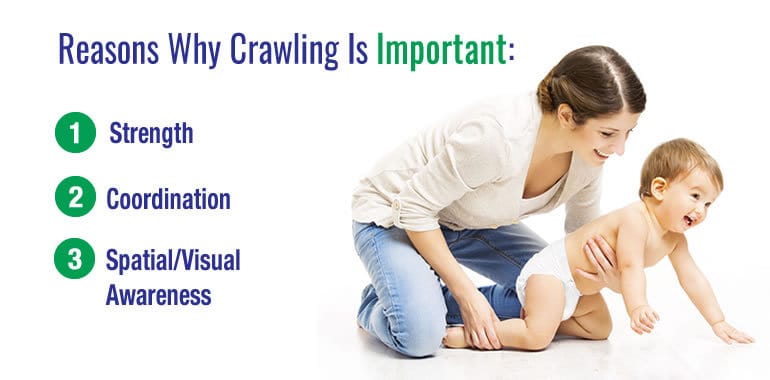
Why Crawling Matters:
- Strength:
Of course, as a PT, strength is my top priority! Crawling helps build strength in the hands, wrists, elbows, and shoulders since these joints have to support the body’s weight. This weight-bearing also stretches and develops the ligaments in the hands and wrists, helping form the natural arches essential for fine motor skills like writing and grasping. Plus, maintaining the “hands-and-knees” position requires core strength. Occupational therapists often note that kids who don’t crawl may struggle more with skills like handwriting, climbing, or pulling. Crawling also helps strengthen the neck and trunk extensors needed to keep the head lifted, which later supports good posture when sitting or standing. - Coordination:
Crawling is the first big opportunity for bilateral coordination—using both sides of the body together. It activates both hemispheres of the brain to work in sync as the child moves opposite limbs in a coordinated rhythm. It also fosters hand-eye coordination: the child sees their goal and directs their hands to get there. These foundational skills carry over into activities like reading, writing, dressing, and feeding themselves. - Spatial and Visual Awareness:
Crawling improves a child’s awareness of their environment, helping with depth perception, obstacle navigation, and problem-solving skills.
What Does Research Say?
Short term, studies show that crawling itself doesn’t predict other early motor milestones—meaning babies who skip crawling aren’t necessarily “behind,” and those who crawl aren’t automatically ahead. The long-term effects of skipping crawling are still being studied.
What’s the Takeaway?
Regardless of crawling debates, tummy time is non-negotiable. It’s critical for strengthening head and neck muscles and helping babies engage with their surroundings. Sure, most babies don’t love tummy time (and honestly, I’ve yet to meet one who does), but it’s essential for preventing future issues like weakness and poor posture.

Christine Astarita
She discovered her passion for the neurologic pediatric and adult population during her clinical affiliation at a special services school in Cape May, New Jersey. She is an active member of the APTA and continues to take post-graduate course work related to treatment methods for neurological diagnoses.