
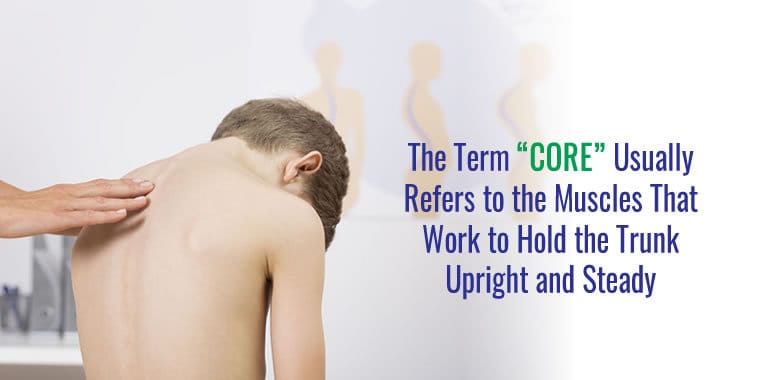
If you're a parent of a child with movement difficulties—regardless of the diagnosis—chances are you’ve heard this phrase before:
“Your child has a weak core.”
It’s a common explanation, often tossed around by doctors, therapists, and other professionals. But what does it really mean? Does it just mean they can’t do a sit-up or have weak abs? Not quite.
So… What Is the Core, Really?
When we say “core,” we’re talking about the group of muscles that work together to keep the trunk upright and steady—especially when the arms and legs are moving. This includes not just the abdominals and back extensors, but also the muscles of the neck, which play a huge role in helping a child hold themselves upright.
These muscles must coordinate smoothly to support head and trunk control. So yes, the abs and back may be weak—but they’re not the whole story.
Other Factors That Affect Core Strength
(Check out the video for visual examples!)
Here’s what else contributes to core weakness or poor posture:
Flexibility
Good flexibility is essential for core muscles to activate properly. For instance, if hip flexibility is limited, a child may sit with their pelvis tucked under and back rounded. In this position:
- The back muscles are overstretched and can’t do their job well
- The neck compensates, which can lead to overstretched front neck muscles and tightness in the back of the neck
Postural Response Mechanisms
This is just a fancy way of saying “your body’s natural reactions to changes in position.” These automatic responses help us stay upright, shift weight, or balance ourselves—and they play a big role in core stability, too.
It All Works Together
Strength, flexibility, and those postural responses all work as a team. So if your child struggles to keep their head up, it’s not just about weak neck muscles. You have to look at:
- The position of their legs
- Their pelvis alignment
- Their spine and back
- And how all of that affects their head and trunk control
Why This Matters
If these issues aren’t addressed correctly—and if therapy doesn’t take all contributing factors into account—over time it can lead to more serious structural issues like:
- Muscle tightness or contractures
- Pelvic misalignment
- Decreased functional movement
Next Time You Hear “Weak Core”…
Ask why.
What exactly is contributing to your child’s difficulty staying upright?
And more importantly—how can we support all those areas to help them get stronger?
Knowledge is power. Now you’ve got a deeper understanding of what “core weakness” really means—so you can ask the right questions and advocate for a more complete approach to your child’s therapy.

Christine Astarita
She discovered her passion for the neurologic pediatric and adult population during her clinical affiliation at a special services school in Cape May, New Jersey. She is an active member of the APTA and continues to take post-graduate course work related to treatment methods for neurological diagnoses.