As a physical therapist, I often get asked, “What’s the difference between muscle tone and strength?” To help parents better understand their child’s needs, I’ve put together this simple guide.
What Is Muscle Tone?
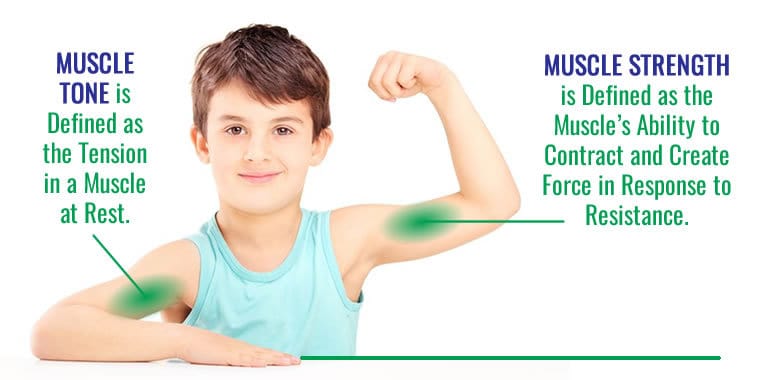
Muscle tone is the natural tension in a muscle when it’s at rest. It’s how your muscles react automatically when they’re stretched or moved suddenly. For example, if someone quickly straightened your elbow, your biceps would instinctively contract to protect your arm from injury.
- Low Tone (Hypotonia):
Children with low tone have muscles that react slowly to stretches and may struggle to hold muscle contractions for long. If their arm is quickly stretched, their biceps might barely respond or not at all. These muscles often feel soft or floppy. - High Tone (Hypertonia):
Kids with high tone have muscles that overreact to stretches and stay tense longer than usual. If their arm is stretched, their biceps might contract quickly and stay tight. Because their muscles are often in this constant state of tension, they may have trouble relaxing, which can lead to stiffness, reduced range of motion, and orthopedic issues.
What Is Muscle Strength?
Muscle strength is your muscle’s ability to actively contract and produce force when you want it to move. It’s the power behind intentional movements, controlled by signals from your brain. Strength depends on muscle size and can be improved through exercise and training.
Using the same example, muscle strength is what allows you to resist someone trying to straighten your arm—you actively contract your biceps to hold it in place.
Bottom Line:
While muscle tone and strength are different, they are closely connected. If a muscle isn’t in the right position or state (due to tone issues), it can’t contract effectively, which affects strength.

Christine Astarita
She discovered her passion for the neurologic pediatric and adult population during her clinical affiliation at a special services school in Cape May, New Jersey. She is an active member of the APTA and continues to take post-graduate course work related to treatment methods for neurological diagnoses.