
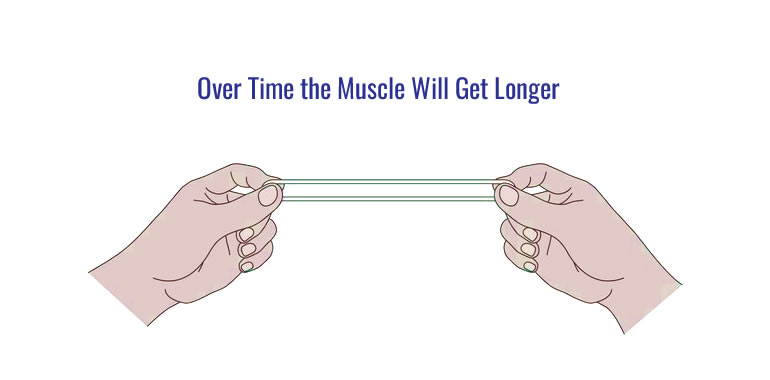
Recently, I was chatting with a parent about something we hear all the time in the clinic—stretching. Her son has Spastic Quadriplegic Cerebral Palsy and experiences tightness throughout his body, especially in the hamstrings (back of the thighs) and adductors (inner thigh muscles). She asked a great question:
"Why do his legs feel looser after physical therapy but tight again the next day?"
Let’s break it down in a way that makes sense—using a hair tie.
Imagine two hair ties:
- One fresh out of the pack—tight and springy.
- One older and more stretched out.
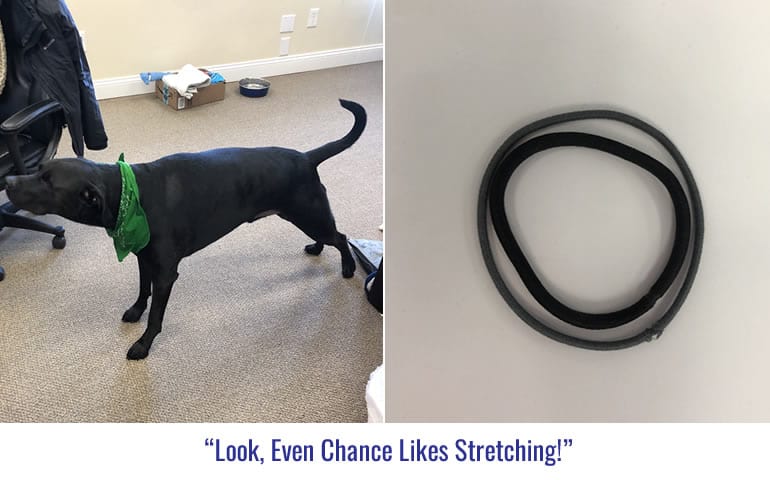
When you stretch the new one, it expands, but the moment you release it, it snaps back to its original shape. Muscles work the same way. A quick stretch may help for a moment, but they return to their “default setting” if that stretch isn’t sustained or followed up correctly.
Now, over time—and with consistency—the hair tie does begin to loosen. But it doesn’t happen in one or two stretches. Muscles are no different. Short bouts of stretching help in the moment but don’t lead to long-term changes without repetition and duration.
So what does that mean for real life?
Instead of holding a quick stretch for 15-30 seconds, we want to incorporate long-duration positioning that encourages muscles to lengthen.
For example:
Let’s say this same client holds a cross-legged sitting position with a sandbag gently weighing down his legs for 15–20 minutes. Not only is this a more effective stretch for the adductors, but we can also add in reaching or play tasks while he sits—maximizing both time and function.
Stretching is great—but it’s not enough on its own.
One big key most people overlook is the importance of follow-up movement. After stretching, we want to activate the muscles in their new lengthened range. This helps the brain and body work together to keep that new flexibility.
Another example:
With babies who have torticollis, we don’t just stretch their necks in one direction and call it a day. We give them opportunities throughout their routine to turn and move their heads in that direction, reinforcing the new range with real-life movement.
Consistency wins. Every time.
Especially for individuals who use wheelchairs and are seated most of the day, stretching needs to be part of a daily routine. Doing it for one week won’t yield lasting results.
Think about how stiff you feel after sitting at your desk for hours. You stand up, stretch for 30 seconds, and feel better—but if you sit back down for another 3 hours, you're stiff again. One stretch didn’t change your body—it helped in the moment. That’s exactly how it works for our kids too.

Christine Astarita
She discovered her passion for the neurologic pediatric and adult population during her clinical affiliation at a special services school in Cape May, New Jersey. She is an active member of the APTA and continues to take post-graduate course work related to treatment methods for neurological diagnoses.